
Al Baik vs KFC Saudi Arabia: Menu, Price and Taste Comparison
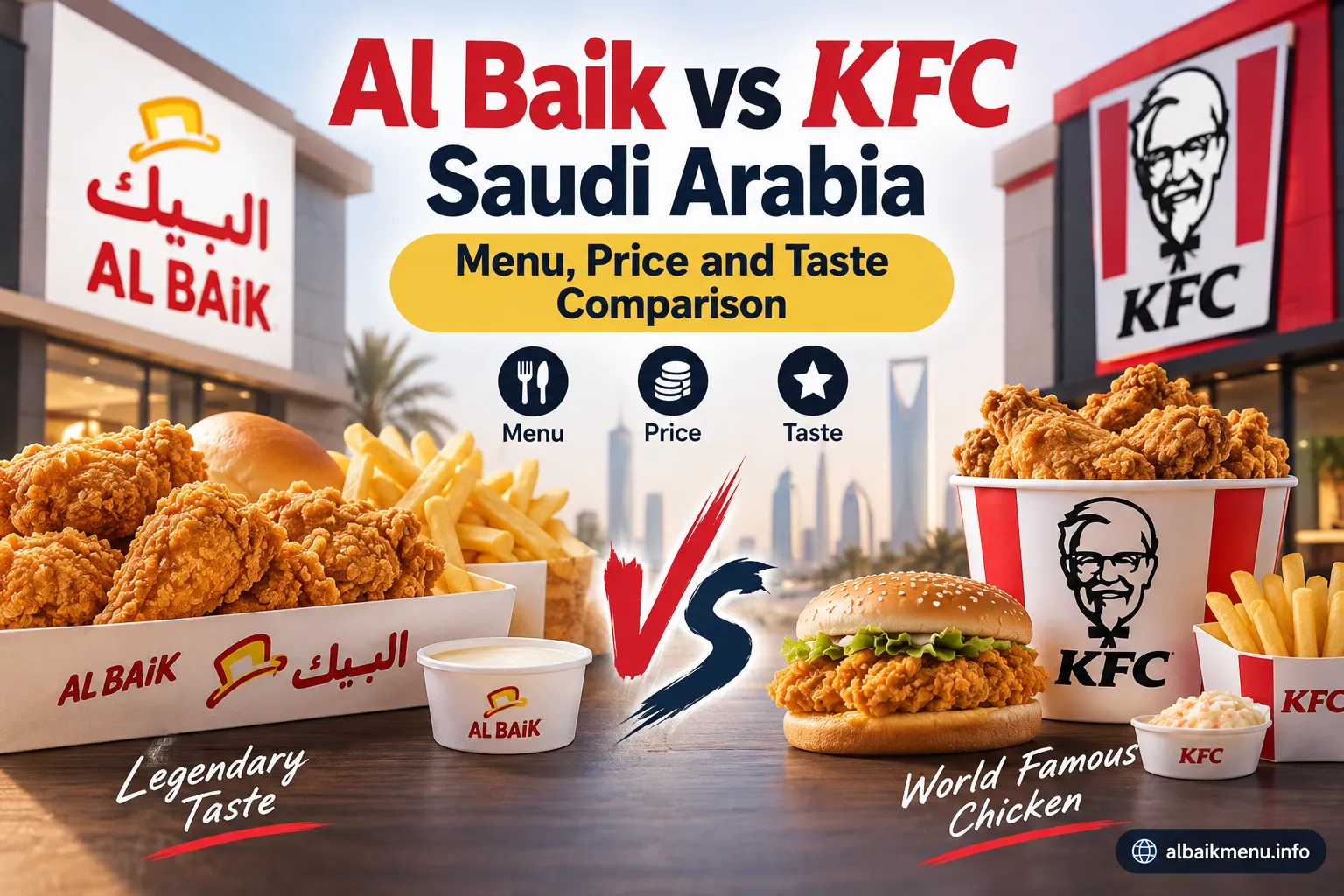
If you have ever stood at a food court in Riyadh or Jeddah trying to decide between the long queue at Al Baik and the familiar red bucket at KFC, you already know this is not a simple choice. Both are among the busiest fast food counters in the Kingdom, both serve fried chicken as their main draw, and both have loyal fans who will defend their pick with real passion. This guide breaks down the menu, the prices, the calories and the actual taste difference between Al Baik and KFC in Saudi Arabia, using real figures so you can decide which one fits your order today.
Quick Answer
Al Baik is generally cheaper for a full meal, uses a distinctive garlic sauce that KFC has no real equivalent for, and is broasted rather than deep fried, which gives it a lighter, crispier texture. KFC offers more variety in buckets, tenders and sandwich formats, along with a wider international menu that includes items like popcorn chicken and mac and cheese. For pure value per riyal, Al Baik tends to win. For variety and familiar Western style fast food, KFC has the edge.
Two Brands With Very Different Origin Stories
Al Baik was founded in 1974 in Jeddah by Shakour Abu Ghazalah, a Palestinian businessman who built the brand around one recipe, broasted chicken made with a pressure fry method and a secret spice blend that has barely changed in five decades. For most of its history Al Baik stayed deliberately local, operating only in western Saudi Arabia around Jeddah, Makkah and Madinah, before expanding into Riyadh and the Eastern Province in the early 2000s. Today Al Baik runs around 201 branches across Saudi Arabia, the UAE, Bahrain and Kuwait, and reported revenue of roughly 20 billion SAR in 2024, according to figures reported for the company.
KFC arrived in Saudi Arabia earlier, in 1975, as part of Yum Brands’ global expansion, and it has grown into one of the largest fried chicken chains in the country with more than 200 restaurants serving an estimated 55,000 customers a day, based on figures the company has shared with local media. Since 2019, KFC Saudi Arabia has sourced its chicken locally through partnerships with Almarai, Al Watania Poultry and Tanmiah Food Group, a detail that matters if you care about supply chain transparency and freshness rather than imported frozen stock.
Both chains are fully halal certified, which is standard across Saudi Arabia’s fast food sector, so that is not a differentiator between them.
Menu Comparison: What Each Brand Actually Sells
Al Baik’s menu centers almost entirely on broasted chicken, seafood and a handful of breakfast and side items. You will not find burgers in the Western sense, no beef products at all, and a much narrower overall lineup than KFC. What Al Baik does offer, it does with real depth on the chicken side: whole pieces, fillet sandwiches, nugget meals, and a full seafood lineup including shrimp and fish fillet that KFC simply does not compete with. You can see the complete Al Baik menu with prices and calories for every current item and combo.
KFC’s Saudi Arabia menu runs wider. Alongside the Original Recipe bucket, the lineup includes chicken tenders in two and three piece portions, hot wings, popcorn chicken, a Zinger burger, a plain chicken sandwich, a spicy chicken sandwich, and the Famous Bowl combo which layers mashed potato, gravy, corn and chicken in one container. Sides stretch to mac and cheese, coleslaw, biscuits and corn on the cob, giving KFC a menu that leans closer to its American roots even after five decades of local adaptation.
If your priority is variety within one order, KFC gives you more formats to choose from. If your priority is a single, tightly executed chicken and seafood menu, Al Baik is the more focused option.
Price Comparison: Where Your Riyal Goes Further
Based on current published pricing, here is how the two brands line up on comparable items.
Al Baik’s four piece chicken meal, which includes chicken, fries, bread and garlic sauce, is priced at 18 SAR. The eight piece version runs 35 SAR, and the whole chicken family meal with two Arabic breads, fries and two drinks comes in at 60 SAR. Individual sandwiches sit in the 5.50 to 13.50 SAR range depending on the cut.
KFC’s pricing runs noticeably higher across comparable categories. The eight piece Original Bucket is priced at roughly 81.90 SAR, more than double Al Baik’s eight piece meal, though it is worth noting KFC’s bucket is chicken only without sides bundled in at that price point. A three piece chicken combo meal at KFC costs around 37.37 SAR, and a standard chicken sandwich meal runs about 32.03 SAR. Smaller items like tenders start around 24.90 SAR for three pieces.
Put together, a typical single meal at KFC, covering a main, a side and a drink, averages close to 32 to 37 SAR, while a comparable Al Baik combo meal sits closer to 16 to 27 SAR for a similar portion size. For families or groups, the gap widens further since Al Baik’s bundled family meals are built around Saudi household sizes and include multiple breads and drinks as standard, while KFC’s larger buckets are priced per piece with sides usually purchased separately.
If you are ordering for value first, Al Baik is the cheaper choice in almost every comparable category. KFC’s pricing reflects its wider format range and the licensing costs of running an international franchise, both of which are baked into the higher price points.
Calorie and Nutrition Comparison
Al Baik’s four piece chicken meal comes in at 1116 calories, and the eight piece meal runs 2660 calories for the full bundle including fries and bread. A single chicken fillet sandwich is 405 calories, and the fish fillet sandwich sits at 420 calories, giving Al Baik reasonably transparent, published numbers across its full menu, along with a detailed breakdown in the Al Baik calories and nutrition guide covering allergens item by item.
KFC does not publish a fully localized Saudi Arabia nutrition sheet the way Al Baik does, so calorie figures for the region are typically estimated from KFC’s global recipes, which can run close to or slightly above Al Baik’s equivalents depending on the cut and breading method. Broasting, the pressure fry technique Al Baik uses, generally seals in less oil than standard deep frying, which is part of why Al Baik’s chicken is often described as lighter on the stomach despite similar or higher calorie counts on paper.
Neither chain is a diet food option, and if you are tracking intake closely, sides and sauces add up fast at both counters. Skipping the bread and one sauce packet at Al Baik, or choosing grilled options where available at KFC, is the simplest way to cut calories at either brand.
Taste Test: What Actually Sets Them Apart
This is where the debate gets personal, but a few consistent points come up across reviews, regulars and food writers covering both chains.
Al Baik’s garlic sauce is the single most cited reason people prefer it. It has developed a cult following strong enough that some travelers pack extra containers of it in their luggage when leaving Saudi Arabia. The broasting method also gives Al Baik chicken a texture that is crispier on the outside and notably juicier inside compared to standard deep frying, since the pressure cooking process locks in moisture more effectively.
KFC’s Original Recipe leans on its famous eleven herb and spice blend, which delivers a more heavily seasoned, saltier flavor profile than Al Baik’s simpler approach. If you grew up on KFC anywhere else in the world, the Saudi Arabia version will taste close to what you already know, with only minor regional tweaks to spice level. That familiarity is exactly what some customers want, while others find Al Baik’s more distinct, less globally standardized flavor to be the reason they choose it over any international chain.
Neither is objectively better. It comes down to whether you want a familiar, well seasoned bucket you already know, or a more unique, sauce driven flavor that does not really exist outside Saudi Arabia and its neighboring Gulf markets.
Which One Should You Order
If you are budget conscious and ordering for a family or group, Al Baik delivers more food per riyal and its bundled meals are built for exactly that use case. If you want variety within a single order, including sandwiches, tenders, popcorn chicken and sides beyond fries, KFC’s broader menu covers more ground in one visit. If seafood is on your mind, Al Baik is the only one of the two with a real shrimp and fish fillet lineup worth ordering.
For most first time visitors to Saudi Arabia asking which to try, the honest answer is both, since they solve different needs rather than compete head to head on every point. Al Baik remains the local favorite for a reason that goes beyond price, while KFC offers the reliability of a menu you likely already know from home.
Frequently Asked Questions
Is Al Baik cheaper than KFC in Saudi Arabia?
Yes, on nearly every comparable item Al Baik runs lower than KFC, with the gap widening on family sized meals.
Which one is more popular in Saudi Arabia?
Al Baik is widely considered the local favorite and consistently draws longer queues, though KFC remains one of the top three fast food chains in the country by outlet count.
Does KFC in Saudi Arabia taste different from KFC elsewhere?
The core recipe stays close to the global standard, with only minor local adjustments to spice level and side dishes.
Is Al Baik or KFC healthier?
Neither is a health food option, but Al Baik’s broasting method generally uses less oil than standard deep frying, which some nutritionists point to as a modest advantage.
