Al Baik Meaning: What Does “Al Baik” Actually Mean?
Millions of people across Saudi Arabia, the UAE, Bahrain, and beyond queue for Al Baik every single day — and most of them have never actually asked what the name means, or that it wasn’t even the restaurant’s original name at all. This is the real story: a Palestinian refugee, a warehouse in Jeddah, a name that only appeared twelve years after the restaurant opened, and the meaning behind it.
Quick Facts: The Al Baik Name
|
Detail |
Information |
|
Original name |
“Broast Restaurant” |
|
Year founded |
1974, Jeddah, Saudi Arabia |
|
Year renamed to “Al Baik” |
1986 |
|
Founder |
Shakour AbuGhazalah |
|
Most cited meaning |
Arabic poetic/colloquial term meaning “Pick,” “Choose,” or “Select” |
|
First location |
A converted warehouse in Sharafiyah, Jeddah |
It Didn’t Start as “Al Baik” At All
Here’s the detail almost nobody outside Saudi Arabia knows: for the first twelve years of its existence, the restaurant wasn’t called Al Baik. It opened in 1974 as “Broast Restaurant” — a name that simply described what it sold, since broasting (a pressure-fry cooking method) was genuinely new to the Saudi market at the time. It wasn’t until 1986 that the restaurant was renamed to the “Al Baik” the region knows today.
That gap matters for understanding the brand. The name people now associate with queues, garlic sauce, and cross-border road trips wasn’t the founding vision — it was a rebrand that happened after the business had already established itself, and, as it turned out, after its founder had already passed away.
The Founder: Shakour AbuGhazalah
Al Baik’s origin story starts far from Jeddah, in Ramleh, Palestine. Its founder, Shakour AbuGhazalah, was displaced from Palestine during the 1948 Nakba at the age of 20, arriving in Saudi Arabia as a refugee. Rather than a straightforward business plan, the restaurant grew out of a much simpler personal drive: a conviction that ordinary people deserved high-quality, affordable food served quickly, courteously, and in a clean environment — standards that weren’t common in fast food at the time, anywhere in the region.
In 1974, AbuGhazalah opened his first restaurant in a converted warehouse in the Sharafiyah district of Jeddah. It was the first restaurant in Saudi Arabia to introduce broasting — cooking chicken by pressure-frying it in a sealed fryer rather than standard open-fat deep frying — a method that locked in moisture while still producing a crisp exterior. That single technical choice is arguably the real foundation of the brand’s entire reputation, more so than the name itself.
Tragically, AbuGhazalah didn’t get to see the business grow into what it became. He died in August 1976, just two years after opening the restaurant, after a battle with cancer, at the age of 48.
From Father to Son: How the Name Actually Changed
After Shakour AbuGhazalah’s death, his son Ihsan Shakour AbuGhazalah took over operations. It was under his leadership — a decade later, in 1986 — that “Broast Restaurant” became “Al Baik.” Ihsan is also credited with developing the now-famous 18-spice secret marinade that defines Al Baik’s chicken today, a recipe the company has never published and has guarded for decades. “We learned everything from our father,” Ihsan has said publicly about the values that shaped the brand’s early direction — quality, speed, and courteous service — even as the name and recipe evolved under his own leadership.
So the “Al Baik” identity people know today — the name, the 18 spices, the garlic sauce — was really built in the ten years after the founder’s death, by a son continuing a promise rather than the founder’s own original branding choice.
So What Does “Al Baik” Actually Mean?
This is where things get genuinely interesting — and also where honesty matters. The explanation repeated most consistently across Saudi and UAE food and lifestyle coverage is that “Al Baik” is an Arabic poetic or colloquial term translating roughly to “Pick,” “Choose,” or “Select.” Under that reading, the name works almost like an invitation — “the choice” or “pick this one” — which fits neatly with a fast-food brand built entirely on word-of-mouth reputation rather than advertising.
That said, this explanation doesn’t come from an official Al Baik company statement or a documented linguistic source — it’s the version that has circulated consistently across food blogs and regional lifestyle sites for years, without a clearly cited original source. It’s worth repeating as the commonly understood meaning, but it should be read as “the most widely cited explanation,” not as a company-confirmed fact.
From One Warehouse to a Regional Icon
What makes the name story land differently is what came after it. From that single Sharafiyah warehouse, Al Baik expanded across Jeddah, then to Makkah in 1990, and eventually to more than 150 branches across Saudi Arabia. Its scarcity outside the western region of the Kingdom turned it into something close to a cultural pilgrimage stop — travellers planned road trips around it, Hajj and Umrah pilgrims queued for hours, and boxes of Al Baik became a common carry-on item leaving Jeddah, Makkah, and Madinah airports.
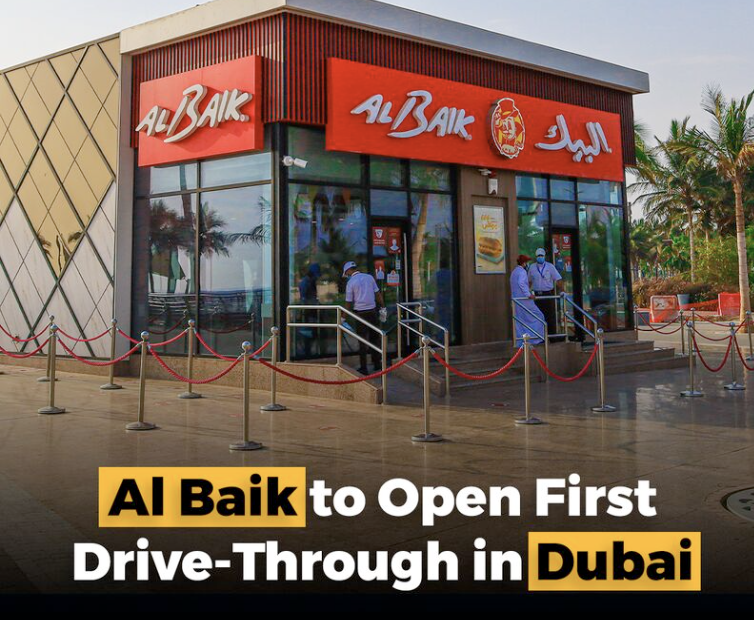
The brand’s first move outside Saudi Arabia came in 2020, with a location in Bahrain. A year later, in June 2021, Al Baik opened its first UAE branch at Dubai Mall — timed, almost accidentally, at the height of COVID-19 restrictions, yet still drawing queues that spilled out of the food court for months. Today the brand operates roughly 35 branches across the UAE alone, alongside continued growth in Saudi Arabia, Bahrain, Kuwait, and newly opened locations in Pakistan.
The Technique That Outlasted the Name Change
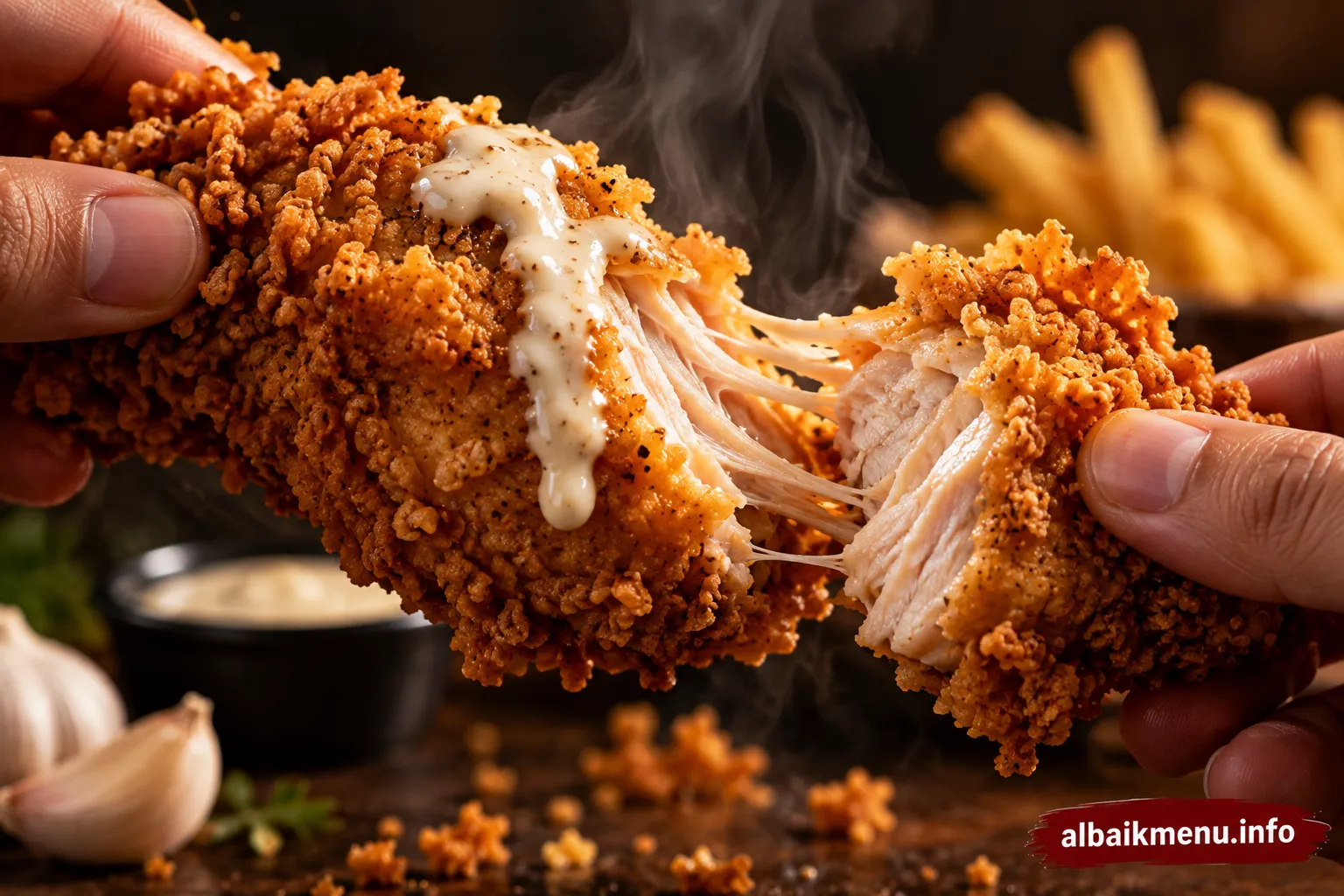
It’s worth separating two things that often get blended together in Al Baik’s story: the name and the cooking method. The name changed in 1986. The method — broasting — was there from day one in 1974, and arguably matters more to the brand’s actual reputation than whatever the sign outside said. Broasting pressure-cooks and deep-fries chicken simultaneously inside a sealed fryer, sealing in moisture while the surrounding oil crisps the coating. It was a genuinely new technique for the Saudi market at the time, and it’s the reason Al Baik’s chicken developed a reputation for staying juicy and crisp even after sitting in a box for a while — a detail regulars still bring up decades later, regardless of what the restaurant was called when they started eating there.
By the time the “Al Baik” name and the 18-spice marinade arrived in the mid-1980s, the broasting method was already the technical backbone the rest of the brand identity was built on top of. In a sense, the founder built the product first and the name came second — which is the reverse of how most fast-food brands are built today, where naming and branding usually come before the menu is finalised.
How the Brand Grew Without Traditional Advertising
One detail that consistently comes up in accounts of Al Baik’s history is how little conventional marketing the brand relied on to grow. Unlike most fast-food chains that expand through heavy advertising campaigns, Al Baik’s growth across Saudi Arabia — and later Bahrain, the UAE, Kuwait, and Pakistan — happened almost entirely through word of mouth. Scarcity played a real role here too: for years, Al Baik stayed concentrated in western Saudi Arabia, which turned it into a genuine travel destination. Pilgrims visiting Makkah and Madinah for Hajj and Umrah would queue for hours, and boxes of Al Baik chicken became a recognisable sight as carry-on luggage leaving Jeddah’s airport. That scarcity-driven demand eventually spilled into a strange side economy in parts of Southeast Asia, where imitation restaurants began copying Al Baik’s branding and using the word “broast” to imply a connection to the original, despite having no actual link to the Jeddah brand.
Why the Story (Not Just the Name) Matters for the Brand
Understanding the founder’s story changes how the name reads. “Pick, Choose, or Select” isn’t just a catchy phrase attached to a logo — it’s a name given, ten years after his death, to a business built on a Palestinian refugee’s specific promise to serve people well regardless of circumstance. That context is part of why Al Baik has resisted heavy advertising for most of its history: the brand’s reputation was built entirely on the product and the service standard AbuGhazalah set from a converted warehouse, long before the name “Al Baik” ever appeared on a sign.
It also explains something people notice today without necessarily knowing why: Al Baik’s menu, pricing, and quality standard stay remarkably consistent across every branch, from the original Jeddah locations to the newest counters in Dubai, Sharjah, and Ajman. That consistency isn’t accidental — it’s the same standard the founder set in 1974, maintained by his son’s generation, and now carried by a company that has grown into one of the most recognised fast-food names in the Middle East.
The Al Baik Logo: A Small Piece of the Same Story
The شعار البيك (Al Baik logo) — the red-and-white script most regulars would recognise instantly on a takeaway box — came along with the rest of the brand identity once the “Al Baik” name replaced “Broast Restaurant” in 1986. Like the name itself, it wasn’t part of the founder’s original 1974 setup; it’s part of what the AbuGhazalah family (Al Baik owner) built onto the business over the following decade. The logo has seen minor refinements over the years as the brand modernised its packaging and signage, but its core script style has stayed recognisable across every market it’s entered, from the original Jeddah branches to the newest UAE counters.
Frequently Asked Questions
What was Al Baik called before it was Al Baik? “Broast Restaurant” — the name it operated under from 1974 until the 1986 rebrand.
Who founded Al Baik? Shakour AbuGhazalah, a Palestinian refugee who arrived in Saudi Arabia after being displaced during the 1948 Nakba, opened the first restaurant in Jeddah in 1974.
What does “Al Baik” mean in Arabic? The most commonly cited explanation is that it’s an Arabic poetic or colloquial term meaning “Pick,” “Choose,” or “Select,” though this isn’t confirmed by an official company statement.
Is the Al Baik founder still alive? No. Shakour AbuGhazalah passed away in August 1976, two years after opening the first restaurant. His son Ihsan continued the business afterward.
When did the restaurant become “Al Baik”? In 1986, twelve years after it first opened as “Broast Restaurant.”
Who created Al Baik’s famous 18-spice recipe? The recipe is credited to Ihsan Shakour AbuGhazalah, the founder’s son, who developed it after taking over the business.
Did Al Baik always use the broasting cooking method? Yes — broasting was part of the restaurant from its 1974 opening under the “Broast Restaurant” name, well before the “Al Baik” rebrand in 1986.
Is Al Baik a Saudi-owned company today? Yes. Al Baik has remained under the AbuGhazalah family’s leadership since its founding, continuing as a privately held Saudi company as it has expanded regionally.
Who is the Al Baik owner today? The AbuGhazalah family has led Al Baik since Shakour Abu Ghazalah’s death in 1976, with his son Ihsan Shakour AbuGhazalah continuing operations and later generations of the family involved in running the company as it expanded regionally.
When did the Al Baik logo first appear? The current Al Baik logo dates to the 1986 rebrand, when “Broast Restaurant” became “Al Baik” — it wasn’t part of the business’s original 1974 branding.